






In today’s competitive real estate market, static photos are no longer enough. Buyers expect dynamic, engaging content that brings properties to life. Enter Reptov, a powerful new platform that transforms ordinary listing photos into professional marke ...

As an Amazon Associate we earn from qualifying purchases.
Photography and media in real estate are changing faster than ever before, with
the adoption of AI, new technology tools, and the countless offerings they afford.
What will be the deciding factors for real estate photographers who want to grow
their business in 2026?
iGUIDE set out to find the answers by interviewing 10 real estate photographers
at the top of their game in “Framing What’s Next,” an in-depth analysis of their
strategies for growth and success. Their answers on what it takes to stay
competitive, earn client trust, and scale for growth have less to do with tech for
tech’s sake and more to do with how tech can be a tool for scaling systems,
creating trust and transparency in listings, and outsourcing what isn’t essential.
We discovered eight common strategies followed by all the individuals and teams
we interviewed. These takeaways go beyond trends and tools and focus on the
best practices that will grow real estate media businesses sustainably in 2026.
Many real estate photographers and media teams shared that their businesses had hit a breaking point, not because of a lack of skill or customers, but because their processes existed only in someone’s head. The strongest operators learned to document workflows, early file naming, prep guides, editing steps, delivery standards, and client preferences so that quality remained consistent and processes could be learned and delegated even as volume increased.
These top practitioners learned quickly that making it easy to do business with them was as important as the visual quality of their products. They eased friction by simplifying booking processes, clarifying expectations, delivering on time, and communicating proactively. In a time-compressed industry, they found that reliability builds loyalty faster than the perfect shot.

Visuals win attention, but visuals alone aren’t sufficient to meet today’s real estate needs. The top photographers and media professionals help prospective buyers visualize a space without being there, and they help build trust and confidence in listings with accurate, reliable information.
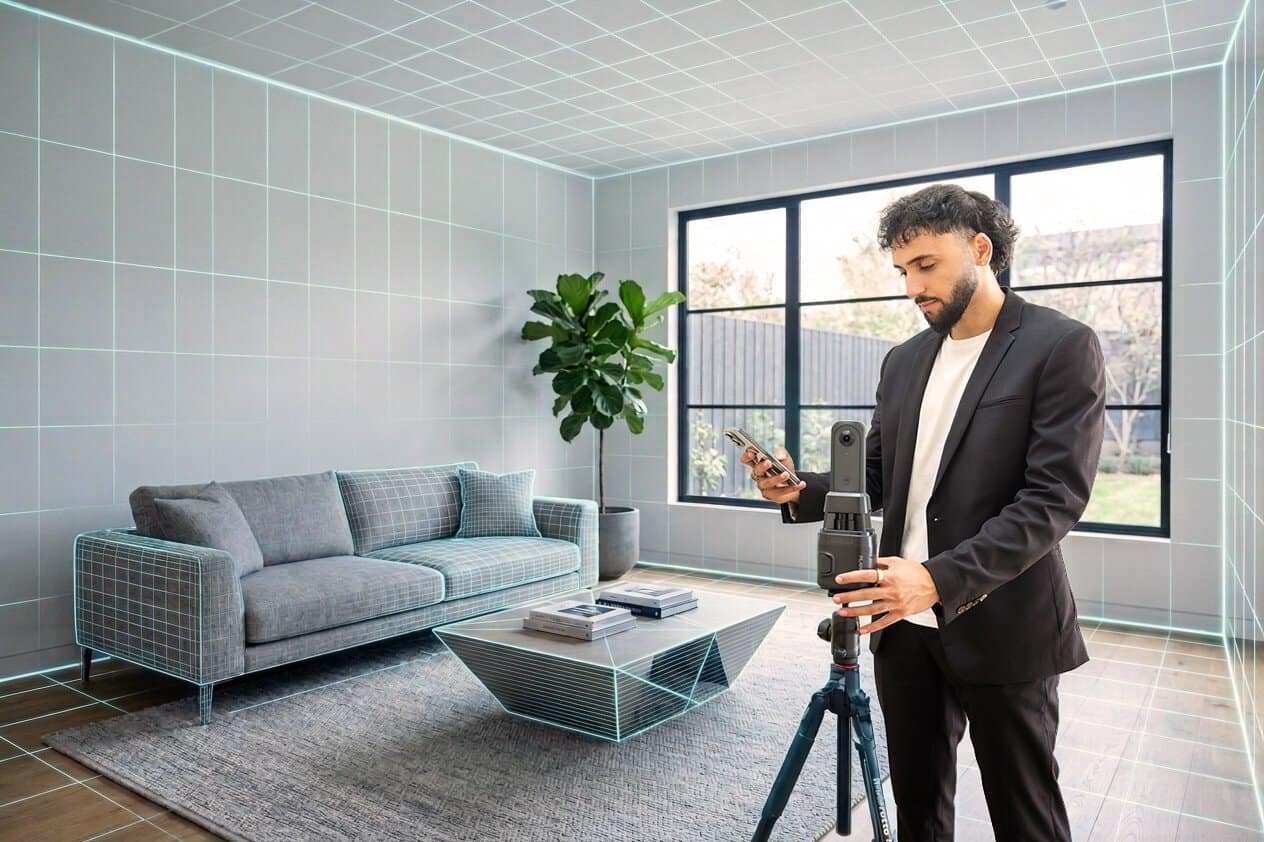
That means competitive listings combine strong visuals with accurate measurements, clean floor plans, and immersive 3D experiences as part of a full-service package, like that offered by iGUIDE, which utilizes LiDAR technology to calculate accurate property dimensions and generate accurate floor plans and create 3D virtual tours within minutes.
The excitement around AI for reducing human workload is justified when it’s used as a tool for repetitive tasks like basic edits, first-draft captions, scheduling, and admin work. But the successful businesses we interviewed retain human judgment in areas tied to the core aspects of their business, such as accuracy, aesthetics, and long-term relationships.
Many of the RE photographers and media teams we interviewed reached a point where their pricing no longer covered the real cost of their work, limiting their growth and making their business model unsustainable. They found stability only after packaging their services more effectively, setting clear client boundaries, and developing pricing that supported sustainability rather than burnout.
Trusted media professionals go beyond delivering files. They help their clients understand why certain media choices matter. They share insights on shifting buyer expectations, and they explain their processes to build trust in their products. Their transparency and authenticity move client relationships from merely transactional to strategic partnerships.
Our interviews revealed that the strongest media teams regularly schedule time for learning and improvement, whether through test shoots, internal workshops, or shared reviews. They value professional growth and make time for it intentionally to improve long-term performance in a way that just working harder and faster can’t.
Successful real estate photographers and media teams understand that meaningful growth comes from relationships, not algorithms. They build their businesses on referrals, collaborations, and long-term opportunities, which are the result of relationships built on trust, their most enduring competitive advantage.
The interviews and case studies in Framing What’s Next suggest that businesses that want to scale sustainably in 2026 won’t just produce great visuals; they’ll operate with transparency, reliability, and foster relationships that support their clients and teams over the long term.
These case studies also prove that scaling a real estate media business doesn’t require a complete overhaul. The professionals we talked to focused on small, intentional changes, and they tackled one thing at a time: documenting core processes, simplifying booking and delivery, adding trustworthy information to every listing, setting clear boundaries, and creating growth-minded learning opportunities.
As competition in real estate media increases and client expectations rise, these successful practitioners are demonstrating that clarity, consistency, and trust are becoming the true differentiators.